
Contents:
1. Why now is the perfect time to create your own cosmetics brand.
2. Developing the brand idea and concept.
3. Market analysis: finding your niche.
4. Formation of brand name and design.
5. Choosing packaging for cosmetics: balancing beauty and functionality.
6. Legal aspects: how to launch a brand legally and safely.
7. Contract manufacturing: a quick start without your own factory.
8. Budget and financial planning.
The desire to do something of your own is the best start for creating a brand that will become part of your story. You’ve seen others launch their own brands, watched Instagram feeds with beautiful jars, and somewhere inside you felt, “Why not me?” But then doubts immediately arise: where to start, how not to lose money, how to find your customer, where to find a technologist, and how to make sure that not only your friends buy your cosmetics?
This article will help you organize everything: from the initial idea to the full launch of the brand, from market analysis to packaging selection, from finding a manufacturer to marketing strategy. You will get a clear idea of how to create your own cosmetics brand and how to launch your own cosmetics line, what exactly you need to do to make your dream come true and your business successful.
1. Why now is the perfect time to create your own cosmetics brand.
The modern cosmetics market is changing faster than ever. Consumers no longer want faceless mass-market products- they are looking for brands with history, meaning, and a unique philosophy. Today’s buyers want natural, ethical, and environmentally friendly products. The trend of creating brands is gaining momentum. Not only famous artists and successful businesspeople are eager to present their own brands to the world, but also young entrepreneurs striving for independence and success. This is your opportunity to make a name for yourself.
The cosmetics business attracts entrepreneurs because it allows them to combine creativity with real sales. It is not only the product that is important here, but also what it conveys. Whereas international giants used to have the advantage, today people trust local brands because they feel closer to them, enjoy faster service, and feel more soul in every jar. You have the opportunity to be part of this wave and launch your own cosmetics brand that will be loved for its value, not just its beautiful packaging.
An example of a successful start: a young entrepreneur created a carboxytherapy kit that quickly gained popularity thanks to its delicate formula, professional design, and clear division into home and salon formats. Read the full story of its creation

2. Formulation of brand ideas and concepts.
Every business starts with an idea. An idea is the core around which the entire business is built. It should not be abstract, but clear and understandable. An idea is not only a choice of cosmetic product, but also a unique reason why it should appear on the market. Its importance lies in the fact that it forms the basis for branding, marketing strategy, and positioning. In essence, creating your own cosmetics starts at this very moment.
It’s not just “I want to make creams” – it’s the answer to the question: “What exactly do I want to create, for whom, and what customer problem does my product solve?”
At this stage, it is important to:
- Understand what beauty product you want to create and what tasks it should perform.
These can be facial care products (creams, serums, masks, toners), hair care products (shampoos, conditioners, serums), or decorative cosmetics. - Determine who you are doing it for, what audience – teenagers, young mothers, men, people aged 35+.
- Find your uniqueness: how your cosmetics will stand out from dozens of others on the store shelf.
Practical exercise: Take a notebook and write down your idea in the form of a short manifesto: "My brand creates ___ for ___ to help them ___." This will form the basis for your concept.

? Example:
My brand creates natural face creams with active antioxidants for women aged 25-40 who live in a big city and face stress and air pollution, to help them maintain healthy skin, feel confident, and look fresh even after a busy day.
Concept is a brand promise, the meaning you put into a product.
In practice, creating a concept begins with immersing yourself in the needs of the target audience. It is useful to create a portrait of the ideal buyer: their age, lifestyle, skin problems, values (naturalness, ethics, minimalism). This helps to decide whether the cosmetic product will belong to the mass market, niche segment, or premium category.
For example, if you are targeting young people, acne treatments, shimmers, or sunscreens may be relevant. For an older audience, anti-aging serums and masks are appropriate. A clear understanding of the concept allows you to avoid chaotic decisions and focus on creating a product that is truly needed.
Many successful entrepreneurs note that they were able to choose the right product for entering the beauty market because they identified a personal problem. In other words, they couldn’t find anything on the market that met their needs, so they decided to create their own line of cosmetics.
The idea may also arise under the influence of a cosmetic product already on the market, which inspires a desire to make something similar, but under your own brand.
Positioning shows how you differ from others.
Strong positioning:
- builds trust in the brand;
- facilitates marketing and content creation;
- helps your audience clearly understand why your your proposal is right for them.
? A striking example – how a blogger turned the idea of body rituals into a brand. The idea here was not only to create cosmetics, but also to shape a special emotional experience: the product was positioned as “oil that smells like comfort,” and this was the key to audience loyalty.
Expert advice: Modern shoppers read labels and value honesty. If you promise natural ingredients, ensure that the composition confirms your claims. This opinion emphasizes the importance of matching promises with reality. Trust is the primary currency in the beauty market.

3. Market analysis: finding your niche.
Market analysis is the bridge between your idea and its implementation. It helps you understand the level of competition, identify unfilled niches, and determine whether consumers are ready for your product. This stage is important because it allows you to reduce risks and make your brand’s product more competitive.
Without thorough market analysis, it is difficult to develop a strategy and understand how to launch your cosmetics brand from scratch with minimal risk and maximum response.
Once the idea has been formed, you need to make sure that there is a place for it on the market. The modern cosmetics market is very saturated. Today, the cosmetics market demands products that meet the following criteria:
- Naturalness.
- Versatility.
- Significant cosmetic effect.
Today, people prefer cosmetics that contain plant extracts, antioxidants, hyaluronic acid, and professional active ingredients. Many want to see only natural and biocompatible ingredients on the list and are negative about the presence of artificial colors and aggressive preservatives in the composition. Also, pay attention to popular fragrances in cosmetics.
Any new product appears only as a result of studying consumer demand. It is necessary to carefully research the cosmetics market and define your target audience. One of the main parameters in this case will be the age of consumers.
- Young audiences can be attracted with shimmers, self-tanning creams, and acne-fighting cosmetics.
- For mature skin, formulas with anti-aging effects are suitable. These can include cosmetic masks, toners, serums, face creams, and eye creams. Perhaps it makes sense to release entire cosmetic lines rather than one products for this category.
- Universal products include gels and foams for washing, sunscreen, and hair care products. Their buyers can be people of all ages and income levels.
Conducting an analysis will help you:
- identify market participants and their strengths/weaknesses;
- determine the optimal price category;
- find a feature that will make your product stand out.
Previously, entrepreneurs launched cosmetics under its own brand based on intuition, without calculating demand. This led to excess inventory and losses.
Today, you can test your idea using simple tools that do not require special training: analyzing queries through Google Trends and AnswerThePublic, conducting polls on Instagram Stories, surveying through Google Forms, and analyzing reactions through TikTok and Reels tests.
Current example: Today, after-sun skin care products are trending—aloe gels, panthenol sprays, and light restorative creams. If you create a line of such cosmetics products with a pleasant texture and natural ingredients, you can establish yourself in the seasonal care segment. You can check demand by launching a survey: "How do you rescue your skin after sun exposure?" — and you will see how receptive your audience is to your idea.
4. Formation of brand name and design.
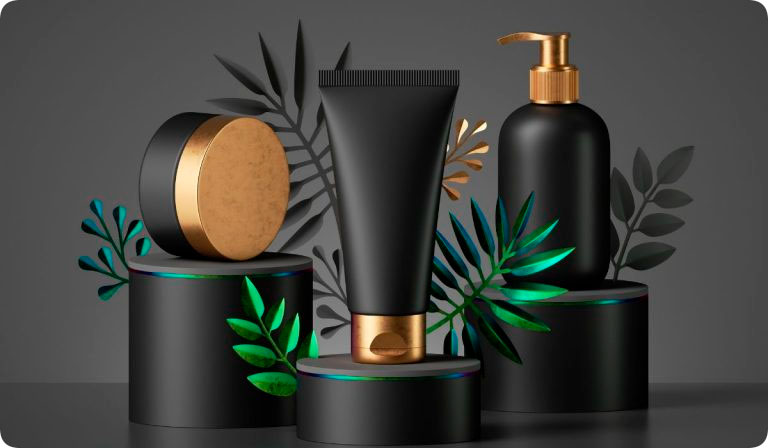
The brand name and visual style are the first things your customer sees and what shapes their impression even before they get to know the product.
A name is not just a word, but an emotional trigger that should evoke the right associations and be easy to pronounce and remember. It should convey the brand’s philosophy, character, and values, creating an image that sticks. Choosing the right name for a cosmetic product is one of the key elements of the branding process and a crucial factor in its further successful promotion. You can come up with a brand name yourself or seek help from a marketer.
Visual style is your brand’s language, which includes your logo, color scheme, fonts, illustrations, and photo style. It helps create a cohesive image and recognizability, making your brand stand out from the competition.
Well-thought-out packaging design and a consistent communication style build trust even before the customer opens the jar. This is the moment when the product “sells itself” from the shelf or from a photo on social media.
For example, brands with minimalist designs are often associated with premium quality and purity of ingredients, while bright colors and illustrations create a mood of energy and youthfulness. Thus, your identity conveys not only an aesthetic message, but also a psychological one.
It is worth developing your own logo, thinking through the label design, and deciding whether the a jar of cream, a bottle of serum or foam will have an additional box. It is better to entrust these tasks to a professional designer in order to obtain a coherent and aesthetic concept.
Modern technologies allow designs to be printed directly onto packaging, giving the product a premium look and feel and making it appear very contemporary. The appearance of a product works like “love at first sight,” so cosmetics must have their own recognizable and stylish “outfit.”
The label should not only look attractive, but also comply with legal requirements: it should contain instructions for use, ingredients, volume, information about the manufacturer and responsible person, date of manufacture, and expiration date. This builds trust in the brand and emphasizes its professionalism.
A well-chosen name and visual style become part of the brand's story, which is easy to share on social media, create photo and video collections, and build a community around the product. It's an investment that works for you for years and helps build an emotional connection with customers.
5. Choosing packaging for cosmetics: balancing beauty and functionality.
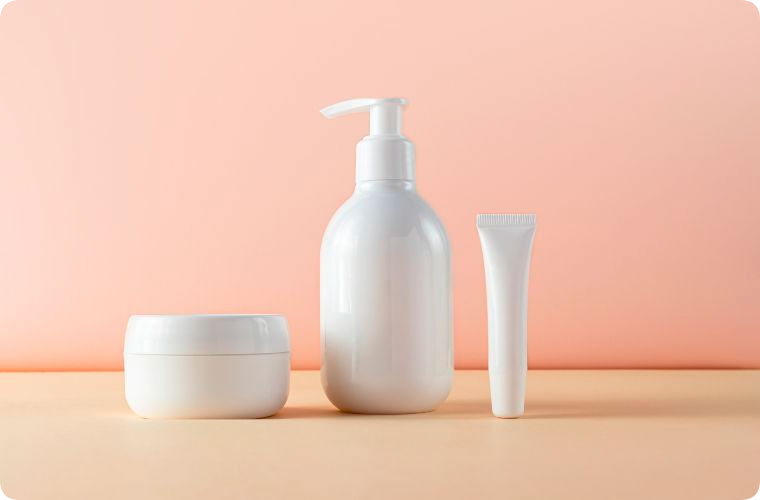
Cosmetic packaging is not just a “container,” but also an important part of the brand experience. It must be safe for the product, compatible with the formula, protect the contents from light and air, and at the same time be convenient for everyday use. When choosing packaging, it is important to consider the type of cosmetic product: jars are suitable for thick creams and masks, tubes are suitable for light textures, and bottles with a pump or airless dispensing system are suitable for serums and delicate formulas that need protection from oxidation.
Design is also important – it must match the brand positioning. Premium products look good in glass bottles with minimalist labels, while bright plastic tubes or unusual shapes are suitable for youth brands.
The balance between beauty and functionality is achieved when the packaging emphasizes the value of the product and creates a positive user experience: it is easy to open, does not leak, is pleasant to the touch, and looks attractive even after several weeks on the shelf.
Table: types of containers and their characteristics
| Type of container | For which product | Advantages | Nuances |
|---|---|---|---|
| Jar | Creams, masks, scrubs | Easy to obtain, presentable appearance | Contact with air and hands requires stronger preservation. |
| Tuba | Light creams, gels, peels | Convenient, compact, inexpensive | Large minimum print runs for tubes with information and graphic images |
| Bottle with foaming agent | Facial cleansers | Creates ready-to-use soft foam without additional friction, saves product, convenient for daily use | – |
| Bottle with pump | Face washes, lotions, creams, shampoos | Convenient portioned dosage, hygienic, product protected | You need to pay attention to the quality of the pump, as there may be supply failures. |
| Airless (vacuum) bottle | Serums, creams with SPF, anti-aging creams, cosmetic products with vitamin C | Maximum protection against oxidation, hygiene, premium appearance | More expensive, limited choice of options |
| Glass bottle with pipette | Oils, concentrates, serums. | Stylish appearance, precise dosing | Requires careful transportation |
Expert advice: Order a small batch of containers for testing. This will allow you to check their ease of use, the dispenser's performance, the lid's tightness, the print quality, and how comfortable the container is to hold. This approach will help you avoid significant costs if the containers turn out to be inconvenient or have manufacturing defects.

Also, choose containers that are easy to reorder in large quantities and are consistently available from your supplier. This will help you avoid situations where you have to change the design, volume, or label because the right packaging is not available.

6. Legal aspects: how to launch a brand legally and safely.
Launching a cosmetics brand requires not only creativity, but also compliance with legal requirements. First, you need to register your business (sole proprietorship or LLC) and select the appropriate NACE codes that allow for the production and sale of cosmetics. This creates a legal basis for further work and protects you from fines.
The next step is to prepare and store product documentation. Each cosmetic product must have a product information file (PIF) that includes the composition, ingredient specifications, microbiological and stability test results, and a safety assessment. It is important to develop a label that takes into account the requirements of the Technical Regulations for Cosmetic Products, the Law “On Protection of Consumer Rights,” and applicable ISO standards.
Before launching a product, information about it should be entered into the notification portal.
In practice, manufacturers or specialized agencies assist in compiling the package of documents and submitting the notification.
Compliance with these rules not only protects consumers, but also increases trust in the brand. Customers are more willing to buy cosmetics that look professional and have all the necessary information on the packaging.
It is also worth considering legal protection for your brand: register your trademark so that no one else can use your name and logo. This is especially important if you plan to scale up and enter new markets.
7. Contract manufacturing: a quick start without your own factory.
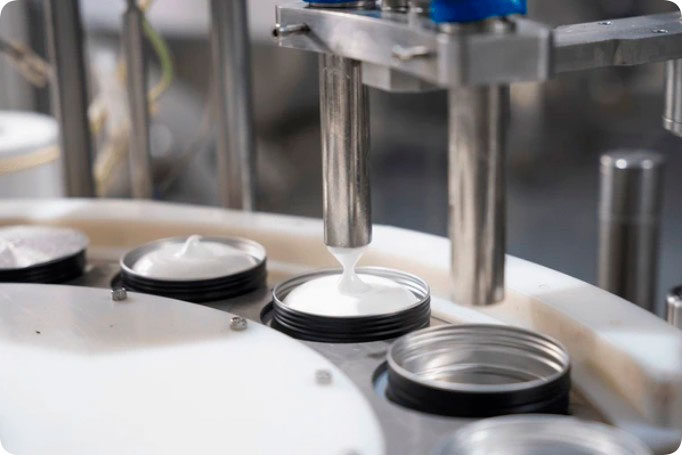
Contract manufacturing of cosmetics is a form of cooperation in which product development and manufacturing are outsourced to a specialized manufacturer that already has the necessary equipment, personnel, and well-established processes.
It’s a simple and straightforward way to launch your brand without owning a factory, which significantly reduces time to market and financial risks. You focus on the concept, style, and promotion, while the technical aspects are handled by professionals.
This format allows you to start with a small batch, test it on your audience, and gradually increase volumes. You can quickly change the formula or packaging design in response to customer feedback and scale up production without compromising quality or changing partners. It’s a safe way to test your business model without a large investment and develop your brand at your own pace.
The manufacturer can offer several formats for cooperation:
- White Label – a ready-made product with your logo, a quick way to test the market.
- Private Label – adaptation of a ready-made formula to your concept: changing active ingredients, aroma, color.
- Custom development – creating a unique formula from scratch, making the product exclusive.
If your goal is to create a strong brand with a long-term strategy, custom development offers the greatest opportunities for growth. You build your own formula, which means you build your own story that will help you establish an emotional connection with your audience and increase loyalty.
When choosing a contract cosmetics manufacturer, be sure to find out what the minimum order quantity is. This is an important factor because it directly affects your launch budget and your flexibility in testing the market. It is best to start by working with manufacturers that allow you to order small batches so that you can test demand, gather feedback, and quickly make changes to the formula or design if necessary.
? A real-life case study proves: choosing the right manufacturer can be crucial for a brand.
Expert advice:
1. Create a detailed brief: texture, aroma, skin feel, desired effect, target audience. The more precisely you formulate your requirements, the faster you will receive a product that meets your expectations.

2. Always order test samples at the start and check not only the product but also the contract manufacturer's service to see if they are suitable for long-term work.

3. When choosing a contract manufacturer, pay attention to whether they have ISO 22716:2007 certification. This is important if you plan to sell products in the EU or work with professional salons that check for compliance with standards.

8. Budget and financial planning.
Creating your own cosmetics brand requires not only an idea, but also a competent financial approach. Budget planning is the foundation that allows you to avoid chaotic spending and move forward with confidence. At the start, it is worth drawing up a financial plan that takes into account not only the cost of the product itself, but also all related items. This allows you to see the full picture and avoid unexpected expenses.
Main expenses:
It is important to determine the minimum order quantity from the manufacturer and calculate how many units of the product you can actually sell in the first few months. It is better to start with small batches and test demand than to freeze funds in the warehouse.
- Product costs: manufacturing, packaging, label printing, logistics.
- Design and branding: creation of logos, layouts, preparation of labels.
- Legal expenses: preparation of PIF, notification, trademark registration.
- Marketing and promotion: photo and video content, advertising, social media.
- Additional items: website creation or marketplace listing, taxes, CRM implementation and payment, rental of premises if selling offline in a store, as well as other possible expenses related to running a business.
When planning your budget, it is useful to set aside a “safety cushion” of 10-15% of the total amount in case of unforeseen expenses.
Another important aspect is cost price. Calculate the price per unit of product, taking into account production, packaging, delivery, and labeling, and then add a markup that will not only cover your costs but also generate a profit.
Product price calculation formula

To determine the retail price of a cosmetic product, use this simple formula:

Cost price + Marketing expenses + Logistics + Markup = Retail price

Example: if the cost price of the cream is 100 UAH, marketing is 20 UAH, logistics is 10 UAH, and the desired markup is 50%, the retail price = (100 + 20 + 10) × 1.5 = 195 UAH.
It is best to create several financial plan scenarios: optimistic, realistic, and minimal. This will help you understand how much you need to invest for the cosmetics brand to pay off and what the finances will look like at different sales volumes.
When you have a plan in place, it’s easier to make decisions about pricing, launching advertising campaigns, and even expanding your product line. A well-thought-out budget is your roadmap, helping you move forward with confidence and without chaotic spending.
9. Marketing: how to tell the world about your brand.
Creating a product is only half the battle, because without the right presentation, no one will know about it. Marketing is a tool that helps you find your audience, form an emotional connection with customers, and build trust. Visual style is especially important for a cosmetics brand, because beauty begins with first impressions.
Today, social networks such as Instagram, TikTok, and Facebook remain the most effective channels. Here, you can show the product “live”: demonstrate its texture, application process, and results. Additionally, it is worth considering collaboration with bloggers and experts in the beauty industry who become brand ambassadors.
Marketing is not just advertising, but also the story you tell. Tell us why you created this particular product, what problem it solves, and what values lie behind the brand. This helps build loyalty and stand out from the competition.
Don’t forget about classic tools: a website with an online store, email newsletters, participation in exhibitions, and offline presentations. Combining online and offline activities allows you to reach different audience segments and strengthen brand awareness.
Content formats that work for cosmetics
- Reels and TikTok videos – short reviews, demonstrations of the application process, emotional reactions from users.
- Before/After – is one of the most powerful formats for the beauty industry, demonstrating real results.
- Customer reviews – honest stories about experiences with the product build trust.
- Educational videos and expert advice – help position the brand as professional.
- Backstage production – showing the packaging or quality control process creates a sense of transparency and builds trust.
Expert advice:
1. Start by focusing on one main promotion channel and perfect it. It's better to be strong on Instagram or TikTok than to try to cover everything at once and remain invisible everywhere.

2. Plan your marketing as a system.
Create a content plan for a month or a quarter: what topics, what formats, what goals. This allows you to build consistency that shapes recognition, rather than posting chaotically.

3. Think about long-term loyalty. Acquiring a customer is expensive, but retaining one is cheaper. Create loyalty programs, bonuses for repeat purchases, and reminders about when a product is running out. This consistently increases profits.

10. Summary and next steps.
As you can see, the question of how to create cosmetics under your own brand is solved systematically and step by step.
Creating your own cosmetics brand through contract manufacturing is not a dream for the future, but a real opportunity today. You don’t need a factory or millions in investment to get started. The main thing is your idea, the desire to move forward, and the right partner who will take care of the production side.
This path gives you freedom: start small, test demand, feel the support of your audience, and gradually scale up. Contract manufacturing is your chance to avoid chaotic expenses and take your first steps confidently, turning your idea into a real brand step by step.
Now you have an understanding of the key stages: from choosing the format of cooperation (White Label, Private Label, or individual development) to selecting packaging, planning your budget, and legal aspects. Each of these steps forms the foundation of a brand that will work in the long term.
The following steps should be taken immediately:
- Define your concept and target audience.
- Write a brief product description: texture, effect, format.
- Select several potential manufacturers and compare the terms of cooperation.
- Order test samples and try them out.
- Create a financial plan and launch your first sales – even a small batch can be a big start.
Each jar with your logo is not just a product, but a step toward your dream. Over time, these steps will form the history of a brand that will have its own voice and influence.
? Remember: uniqueness and sincerity always win. Your customers want to see not just cosmetics, but your energy, your vision, and your care for them.
Take the first step today. Start with an idea that is close to your heart and let it become a product that changes people’s lives and makes you proud.
Questions and Answers
No. Contract manufacturing allows you to fully outsource the technical aspects to a specialized manufacturer. You focus on the concept, branding, and marketing, while the manufacturer handles the formulation, production, and product quality.
It all depends on the format: White Label is the most affordable option for a startup, Private Label is slightly more expensive due to formula customization, and custom development requires the largest investment but offers the highest level of uniqueness. It’s a good idea to start by creating a detailed financial plan and setting aside a 10–15% “safety cushion.”
Focus on your target audience. For young people, acne treatments, highlighters, and sunscreen are popular. For a mature audience, anti-aging serums and masks are in demand. Versatile options to start with include face wash, sunscreen, and hair care products.
A Product Information File (PIF) is required for every cosmetic product, detailing its composition, test results, and safety assessment. Product notification on the registration portal, registration of a sole proprietorship or LLC, and the relevant OKVED codes are also required. Many manufacturers provide assistance in preparing these documents.
White Label is a ready-made product featuring your logo – the fastest way to enter the market. Private Label involves adapting an existing formula (by changing the scent, active ingredients, or color) to fit your concept. Custom Development involves creating a unique formula from scratch, ensuring your brand’s complete exclusivity.
Test your idea before launching: run a poll on Instagram Stories or Google Forms, check the topic’s popularity using Google Trends and AnswerThePublic, and conduct a test on TikTok Reels. This will help you avoid excess inventory and gauge your audience’s actual interest.
In the early stages, it’s best to choose manufacturers who are willing to work with small batches. This allows you to gauge demand, gather feedback, and, if necessary, adjust the formula or design without incurring significant financial losses.
The most effective platforms are Instagram, TikTok, and Facebook. “Before and after” content, customer reviews, behind-the-scenes footage, and instructional videos work particularly well. In the early stages, it’s better to focus on a single platform and perfect it than to spread yourself too thin across all of them at once.
If you are looking for a reliable and caring partner who will turn your idea into a high-quality product and help you go from a dream to a real brand, we are waiting for you at VedaLab.
Related posts
Comments (0)